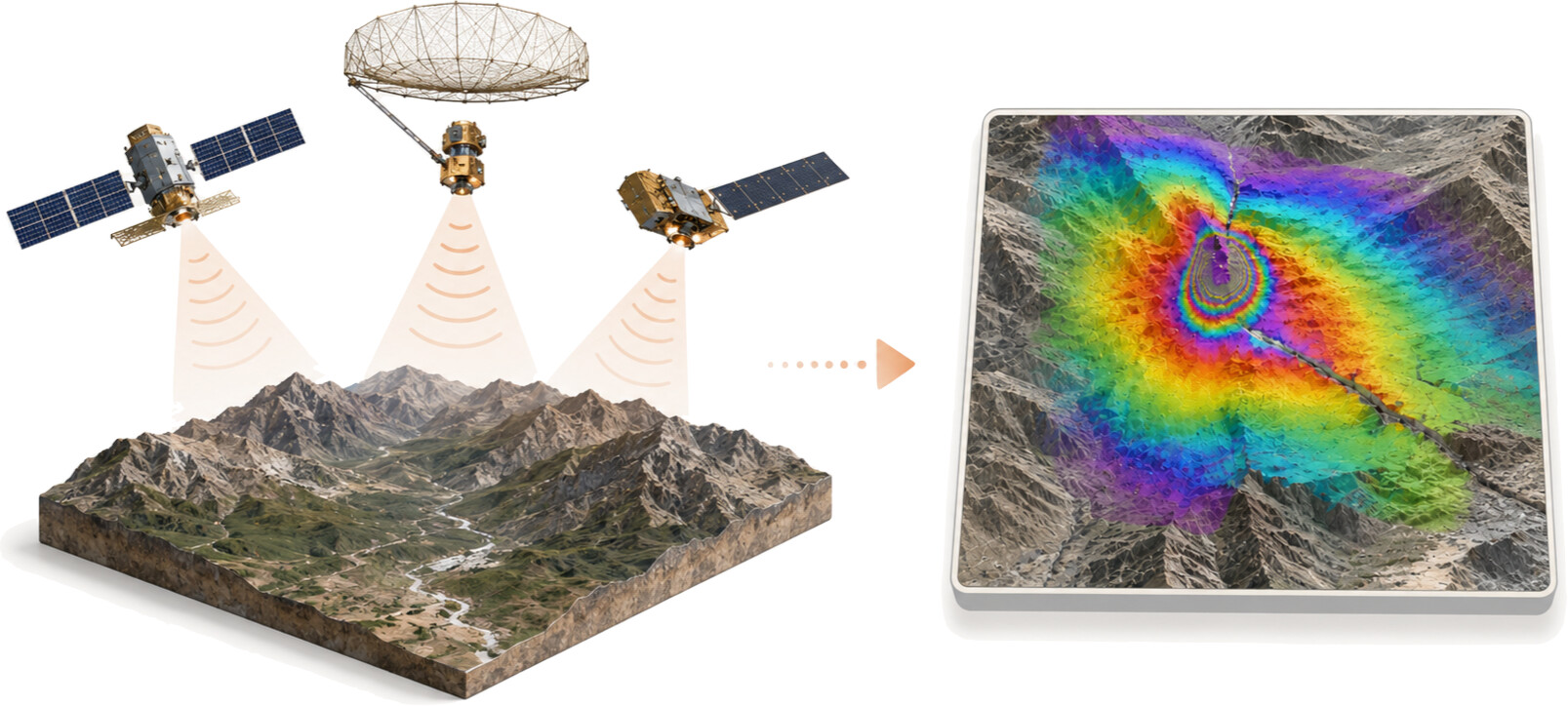
The Geohazards Exploitation Platform is starting a new activity to integrate AMSTer, the SAR & InSAR Automated Mass processing Software for Multidimensional Time series, into GEP.
This work is part of the E-coh CCN, led by Centre spatial de Liège (CSL) and Terradue, and continues the activities initiated under the Ecoh project. The objective is to make AMSTer available to a broader scientific user community through the GEP environment, combining AMSTer’s advanced InSAR processing capabilities with GEP’s cloud-based infrastructure, direct access to Copernicus data, and operational service framework.
What is AMSTer?
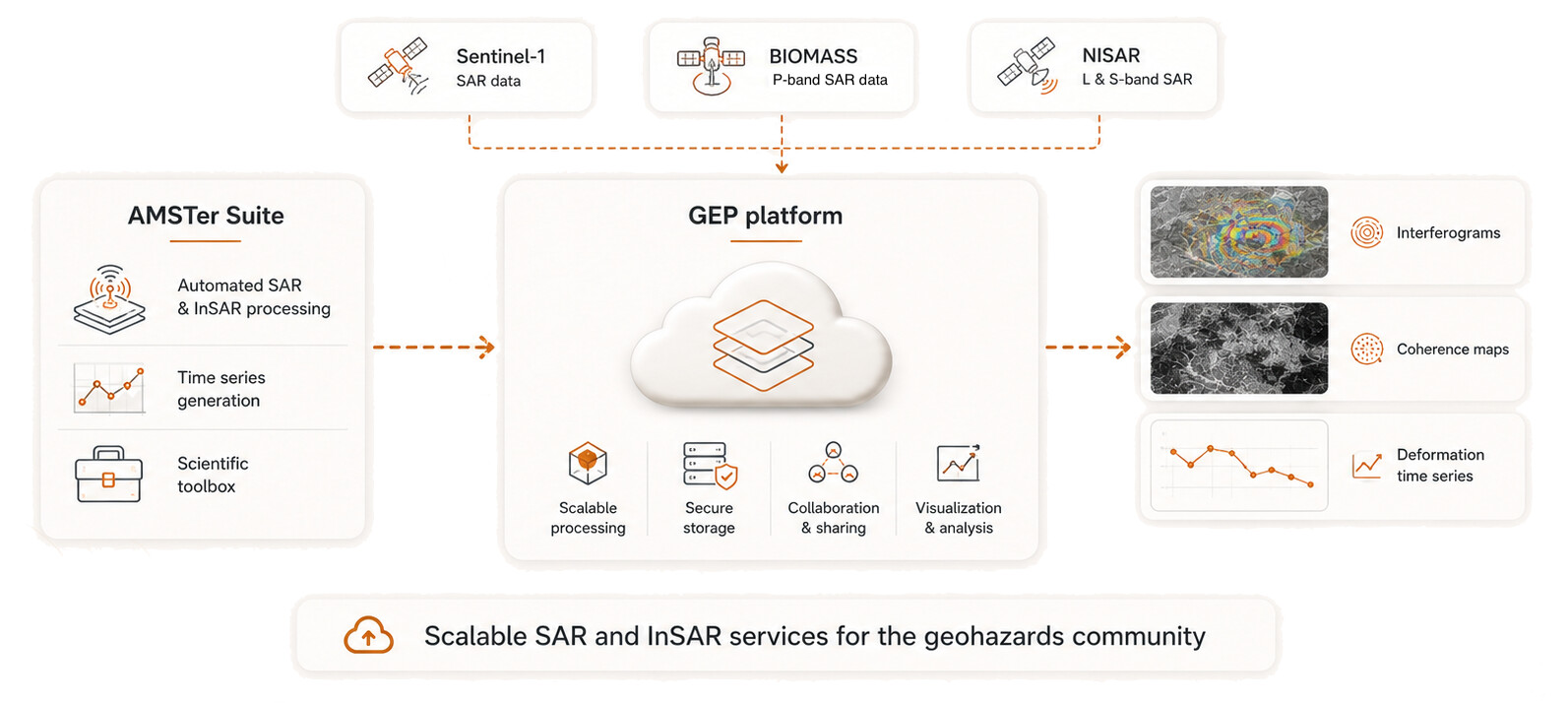
AMSTer is a software suite designed for automated mass processing of SAR differential interferometry and the production of ground deformation time series.
It includes an InSAR command-line processor, the AMSTer Engine, the MSBAS processor for deformation time-series analysis, and a set of shell and Python scripts that automate processing tasks. AMSTer supports advanced SAR and InSAR processing approaches, including multi-sensor workflows and multidimensional deformation analysis.
The integration into GEP aims to move selected AMSTer capabilities from a laboratory-level environment toward a scalable and professionalised service framework, where workflows can be made available as on-demand or systematic processing services.
Why integrate AMSTer into GEP?
GEP provides an ideal environment to scale and expose AMSTer capabilities to expert users.
The platform offers cloud-based processing infrastructure, access to Copernicus Sentinel repositories, support for EO Application Packages, and a service-oriented model focused on geohazard applications.
By integrating AMSTer into GEP, the project aims to support advanced geohazard monitoring use cases, including interferometric processing, coherence analysis, and deformation time-series generation.
The work will help transform selected AMSTer capabilities into reusable GEP services, supported by documentation, tutorials, validation activities, and user testing.
Planned AMSTer services on GEP
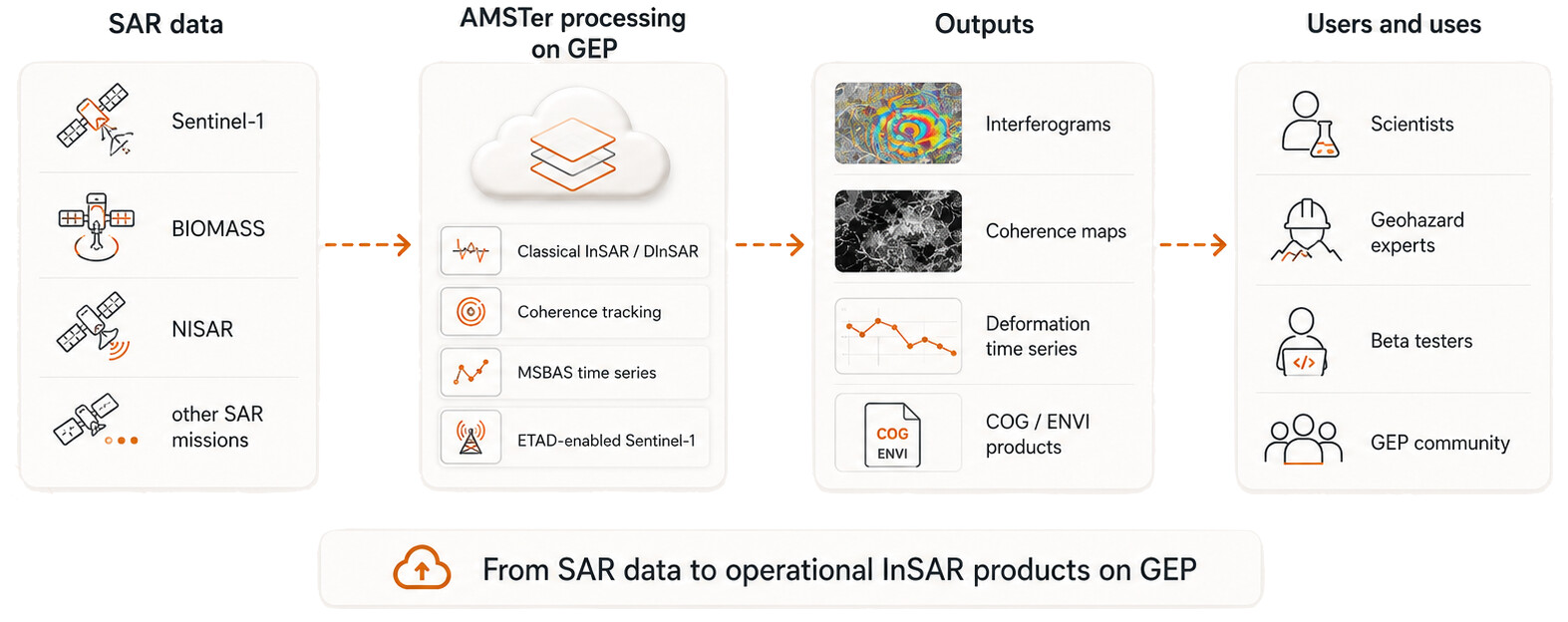
The first target services include classical InSAR and DInSAR processing for image pairs, with support for sensors already handled by AMSTer. Coherence tracking is also planned as part of the service capabilities.
For Sentinel-1, the work will include processing with or without ETAD management.
A second major objective is time-series processing, including amplitude or coherence time series and mass processing for deformation monitoring. The MSBAS approach will be used to combine multiple satellites and acquisition geometries to retrieve displacement components, including east-west and vertical deformation.
The expected outputs include geoprojected products in geographic or projected coordinates, with support for formats such as ENVI and Cloud Optimized GeoTIFF.
Enabling workstreams: ETAD, BIOMASS, and NISAR
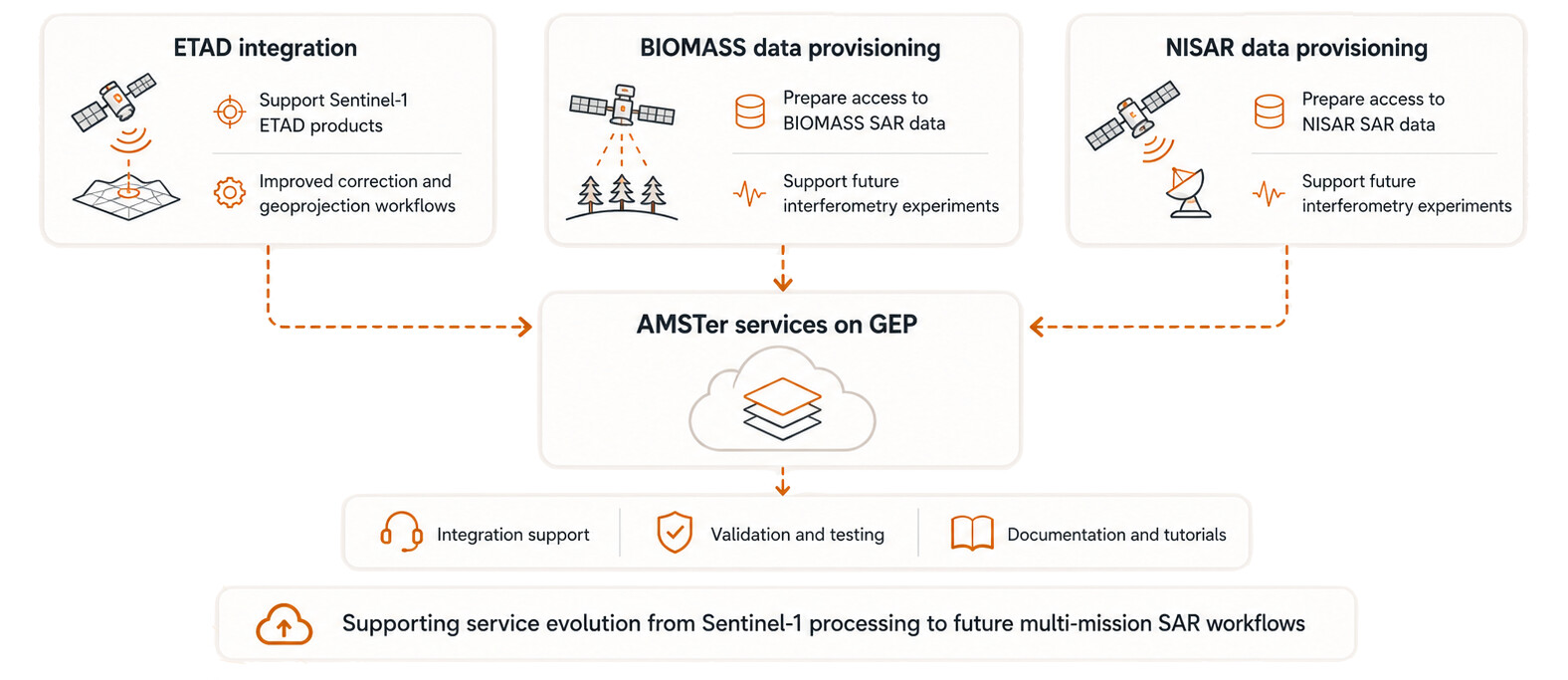
The project also includes enabling workstreams that will support both the first AMSTer services and future multi-mission SAR processing on GEP.
ETAD integration
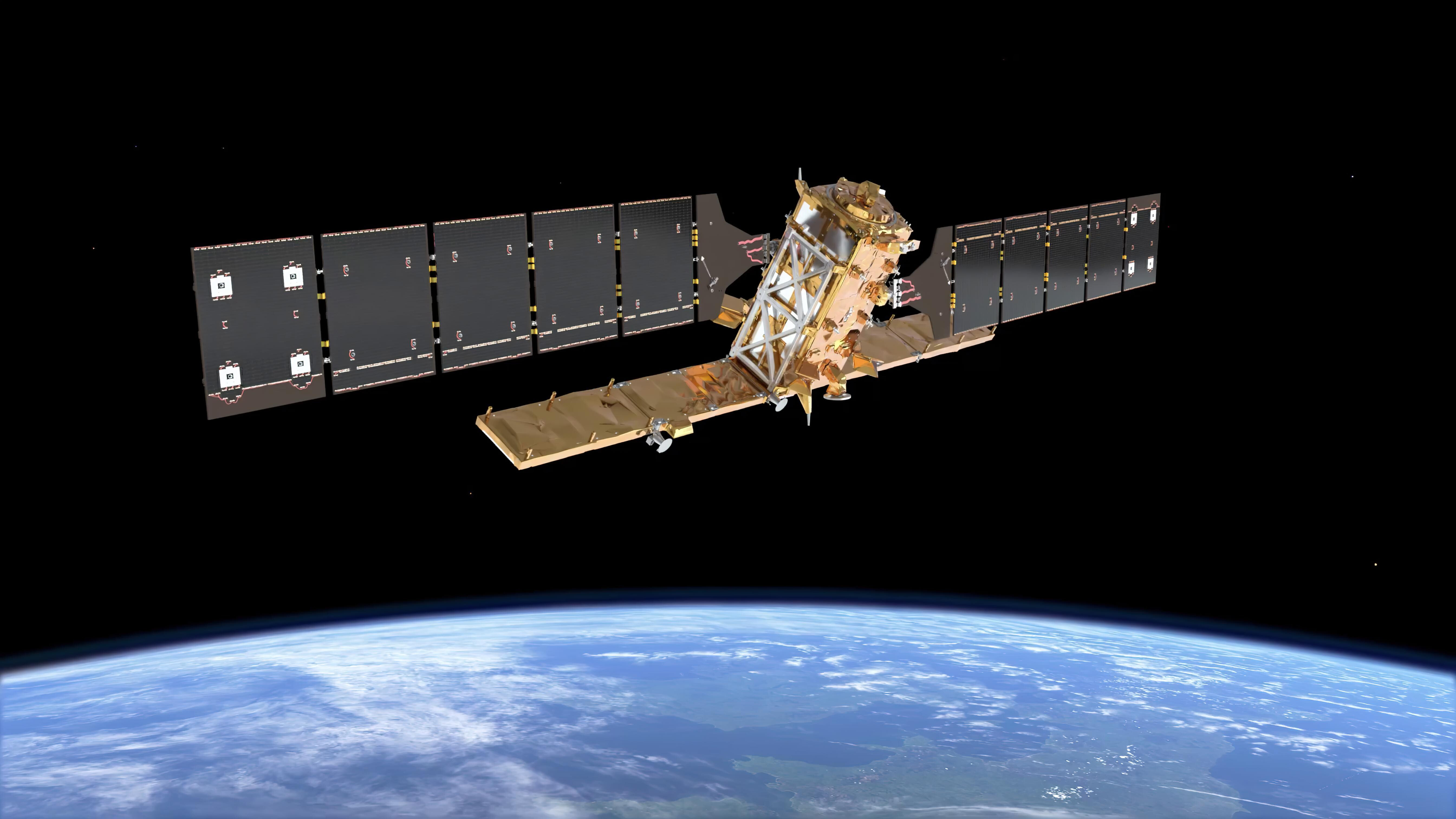
A dedicated part of the activity focuses on integrating the ESA ETAD processor into GEP as an on-demand service.
ETAD products can improve Sentinel-1 processing by supporting more accurate correction and geoprojection workflows. Making ETAD available through GEP will also allow other GEP services to benefit from ETAD products where relevant.
This work is an important enabling step for improving the quality and robustness of Sentinel-1 InSAR processing chains exposed through the platform.
BIOMASS data readiness
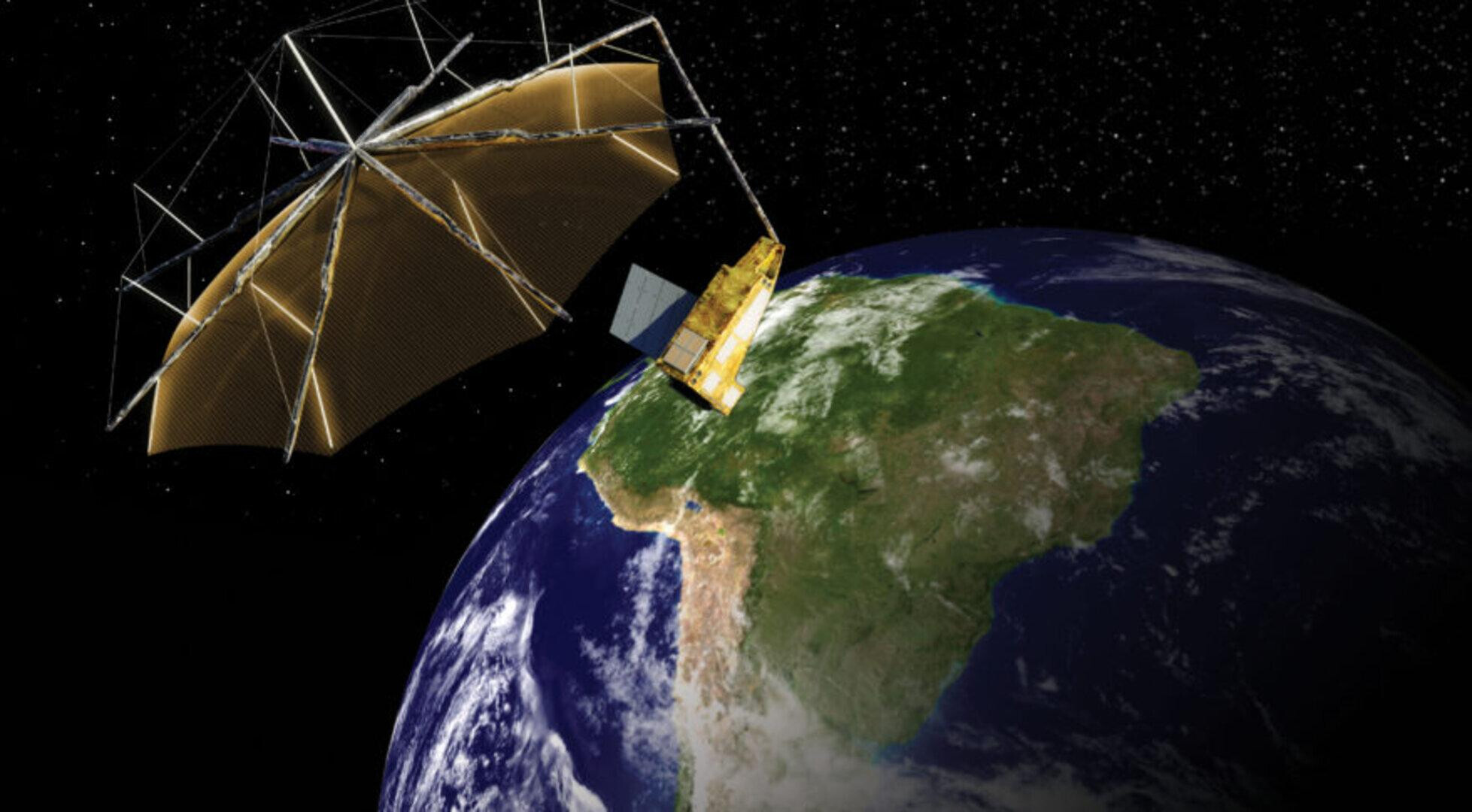
The project will also prepare AMSTer and GEP for BIOMASS data usage in interferometry workflows.
This includes work on BIOMASS data ingestion within AMSTer and the connection between GEP and BIOMASS data repositories. The objective is to support future interferometric processing scenarios as BIOMASS data becomes relevant for the geohazards community.
NISAR data readiness
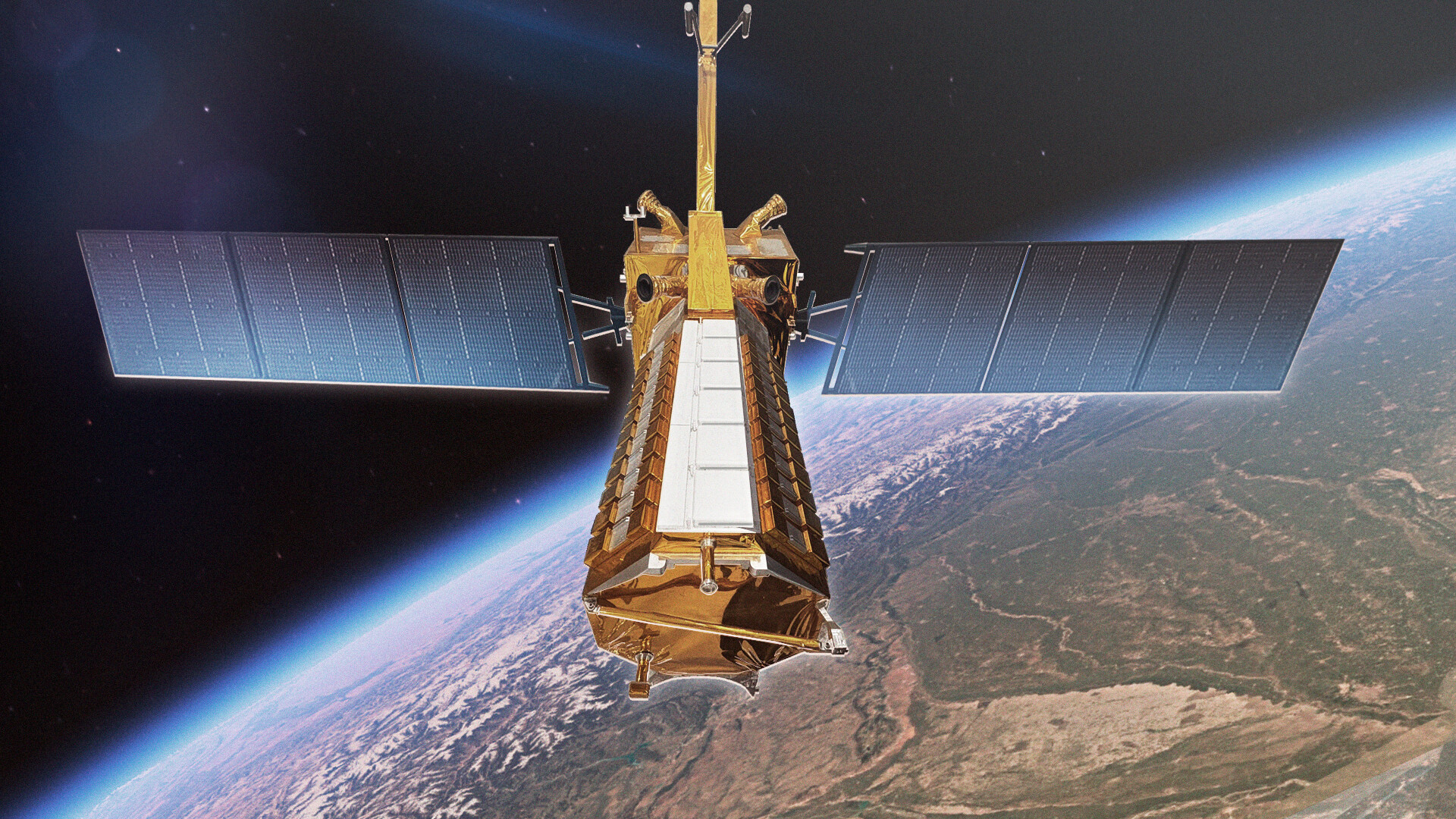
The activity will also address NISAR readiness. This will build on existing AMSTer developments, including NISAR data handling, and will prepare GEP connectivity with NASA-ISRO NISAR repositories. This will help position AMSTer and GEP for future multi-sensor SAR and InSAR processing workflows.
Testing, documentation, and user support
The project includes testing, validation, and documentation activities to ensure that the integrated services are usable and reliable.
Interested users from the Ecoh community are expected to contribute as beta testers. Documentation will include user guidance, tutorials, and hands-on exercises to help users reproduce selected test cases and understand how to use the integrated AMSTer services on GEP.
Toward a persistent AMSTer capability on GEP
This activity is not only a one-off integration exercise. The objective is to establish AMSTer as a persistent scientific suite within the GEP ecosystem.
This means that AMSTer-related services, notebooks, tools, examples, and documentation can progressively become reusable platform assets, available beyond the lifecycle of the initial integration activity.
By combining AMSTer’s scientific processing capabilities with GEP’s cloud-based service environment, the project will help the geohazards community access advanced SAR and InSAR workflows in a more scalable, documented, and operationally usable way.
This topic announces the start of the E-coh CCN activity for integrating AMSTer into the Geohazards Exploitation Platform. The described capabilities are planned project objectives and will be progressively implemented, tested, documented, and made available through GEP.